Stories that linger.

Words that inspire.

  • How to Self-Publish Your First Book on Amazon KDP

    If you’ve ever thought about writing a book, you’re not alone. Many people dream of becoming an author, but they often feel overwhelmed by the publishing process.

    The good news is that publishing a book today is easier than ever.

    Thanks to Amazon Kindle Direct Publishing (KDP), anyone can write, publish, and sell a book to readers all over the world — without needing a traditional publisher.

    In this guide, we’ll walk through the basic steps of self-publishing so you can better understand how the process works.
    Step 1: Choose a Book Idea People Want

    Before writing your book, it’s important to choose a topic that readers are interested in.

    Many successful nonfiction books focus on topics like:

    • Personal growth
    • Business and side hustles
    • Mental health and self-reflection
    • Productivity and habits
    • Learning new skillsA helpful trick is to search Amazon for phrases like “how to,” “guide to,” or “beginner’s guide.” These often reveal topics people are actively searching for.

    Step 2: Create a Simple Outline

    A good outline makes writing a book much easier.

    Instead of staring at a blank page, an outline gives you a roadmap to follow.

    Your outline might include sections like:

    • Introduction
    • Understanding the topic
    • Key concepts readers need to know
    • Step-by-step guidance
    • Common mistakes
    • Final advice

    Once you have a clear structure, writing becomes much more manageable.

    Step 3: Write Your First Draft

    One of the biggest mistakes new authors make is trying to write the perfect first draft.

    Your first draft doesn’t need to be perfect — it simply needs to exist.

    Focus on getting your ideas down on the page and following your outline. You can always go back and edit later.Many beginner nonfiction books fall between 80–150 pages, which makes them easier to write than most people expect.

    Step 4: Format and Design Your Book

    Once your manuscript is complete, the next step is preparing it for publication.

    This includes:

    • Formatting your book for Kindle or print
    • Creating a professional book cover
    • Writing a clear and engaging book description

    Presentation matters. A clean layout and strong cover design can significantly impact how readers perceive your book.

    Step 5: Publish Your Book on Amazon KDP

    With Amazon KDP, you can upload your book and make it available to readers worldwide.

    Amazon handles the technical side of the process, including:

    • Printing physical copies
    • Processing payments
    • Shipping books to customers

    Every time someone buys your book, you earn a royalty from the sale.

    Self-publishing has opened the door for anyone to become an author. What once required a traditional publisher can now be done independently with the right tools and guidance.

    If you’ve been thinking about writing a book, the best time to start is now.

    COMING SOON!

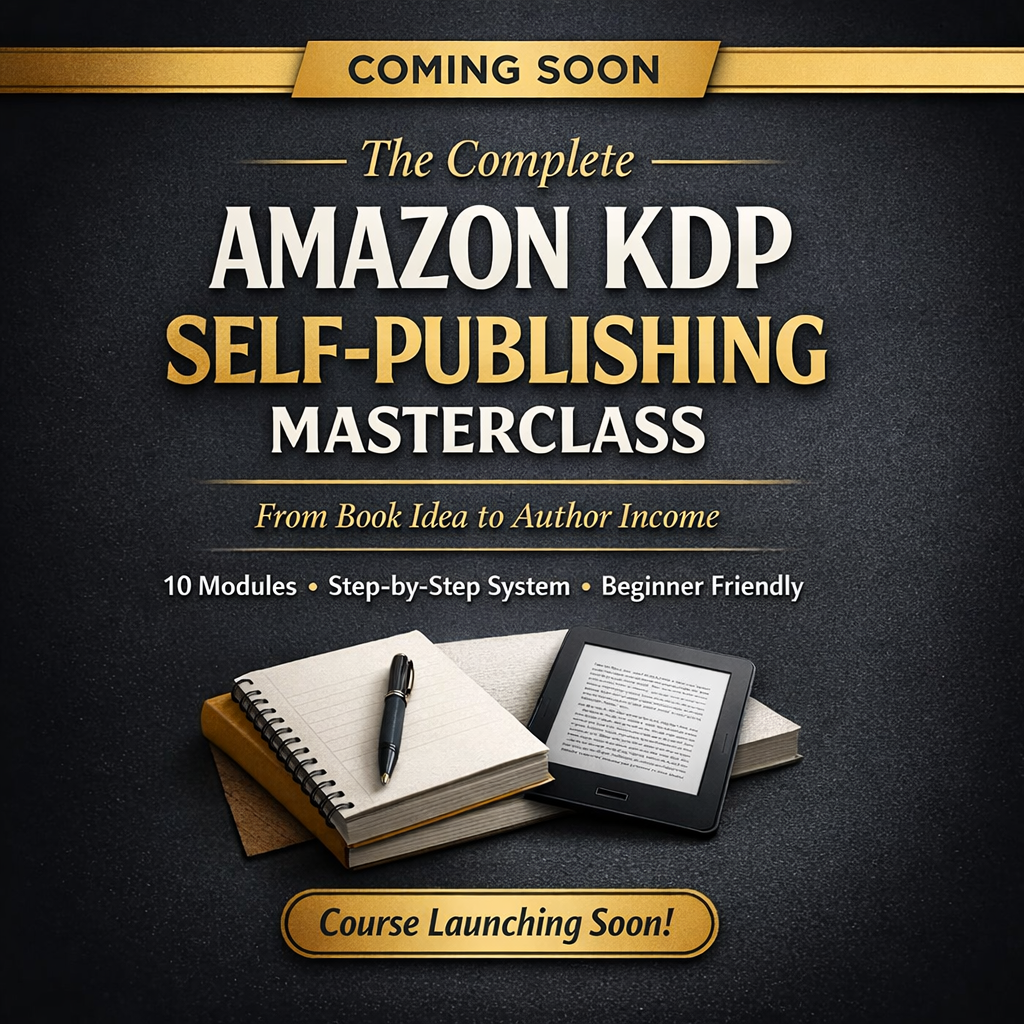
    The Complete Amazon KDP Self-Publishing Masterclass

    I’m currently finishing a brand new course called:

    The Complete Amazon KDP Self-Publishing Masterclass

    This course is designed to walk beginners through the entire process of writing, formatting, and publishing their first book on Amazon KDP.

    Inside the course, you’ll learn:

    • How to find profitable book ideas
    • How to write your book faster without overthinking
    • How to format and publish step-by-step
    • How to get your first book sales

    The course includes 10 detailed modules, tips and tricks most beginners don’t know, and a clear roadmap from book idea to published author.

    📅 Official Launch Date: March 17th

    If you’ve been thinking about writing a book, this course will give you the step-by-step guidance to finally make it happen.

    Stay tuned — more details coming soon.

    LAUNCHING MARCH 17TH
    1 comment on How to Self-Publish Your First Book on Amazon KDP COMING SOON!
    1

  • When people ask me how long it took to write my first book, the honest answer is… a lot longer than 45 days.

    For a long time, I was stuck in the thinking about writing a book phase.

    You know the phase.


    The one where you:

    • Come up with ideas
    • Open a document
    • Write a paragraph
    • Reread it 12 times
    • Decide it’s terrible
    • Close the document
    • Repeat the cycle a week later

    I spent months in that loop.

    Not because I didn’t have ideas. Actually, it was the opposite… I had too many ideas and overthought everything. I wanted the book to be perfect before it even existed.

    Eventually, I realized something important:

    A book can’t improve if it doesn’t exist yet.

    So I stopped overthinking and finally committed to just writing. And once I actually started…
    I finished the entire book in about 45 days.

    The Moment Things Finally Clicked

    The biggest shift wasn’t a magical productivity trick.

    It was simply deciding that the first version didn’t have to be perfect.

    I stopped editing every sentence while writing it.
    I stopped worrying about whether people would like it.
    I stopped trying to sound like a “real author.”

    Instead, I focused on getting the ideas out of my head and onto the page.

    Once that happened, the writing started flowing much faster than I expected.

    The Truth About Writing a Book

    Writing a book isn’t necessarily about talent.

    It’s mostly about discipline and consistency.

    There were days I didn’t feel inspired.
    Days I didn’t feel like writing at all.

    But I kept showing up anyway.

    Some days I wrote a lot.
    Some days I wrote very little.

    But progress is progress.

    And the amazing thing about writing a book is this:

    Once it’s finished… it’s finished.

    You now have something that didn’t exist before. Something you created from nothing.

    That feeling alone makes the work worth it.

    Tips That Helped Me Finish My Book

    1. Stop editing while you write

    Editing while writing is one of the fastest ways to get stuck.

    Your first draft is supposed to be messy.
    Let it be messy.

    You can always improve it later.

    2. Write even when you don’t feel like it

    Motivation is unreliable.

    If you only write when you feel inspired, your book will take forever.

    Instead, treat writing like an appointment with yourself.

    Show up. Even if it’s just for 20 minutes.

    3. Don’t try to write the whole book at once

    Thinking about writing an entire book can feel overwhelming.

    Instead, focus on one section at a time.

    One page turns into ten pages.
    Ten pages turn into chapters.
    Chapters turn into a finished book.

    4. Accept that the first version won’t be perfect

    No one writes a perfect first draft.

    Not beginners.
    Not experienced authors.
    Not bestselling writers.

    The goal of the first draft is simply to exist.

    You can always make it better later.

    The Biggest Lesson I Learned

    The hardest part of writing a book isn’t the writing itself.

    It’s getting out of your own way.

    Overthinking, perfectionism, and self-doubt can keep people stuck for years.

    But once you finally start and commit to finishing, the process becomes much more manageable.

    And before you know it, you’ll look up and realize something pretty incredible:

    You wrote a book.

    If you’ve been thinking about writing a book, consider this your sign to start.

    You don’t have to be perfect.
    You just have to begin.

  • Download My Free Guide Now!

  • Writing your first book is exciting… but it can also feel overwhelming. Many new authors start their journey with passion and big ideas, only to get stuck along the way. If you’re thinking about writing your first book, here are 8 common mistakes first-time authors make and how you can avoid them.

    1. Waiting for the perfect idea

    Many people spend months (or years) trying to come up with the perfect book idea before they even start writing. The truth is, your first book doesn’t need to be perfect. It just needs to be written. Start with an idea you’re interested in and allow it to evolve as you write.

    2. Overthinking everything

    New writers often get stuck trying to make every sentence perfect. This slows down the writing process and makes finishing a book harder. Your first draft doesn’t need to be perfect, it just needs to exist. Focus on getting the words on the page first.

    3. Editing while you write

    Editing while writing is one of the fastest ways to lose momentum. Instead of moving forward, you keep going back and fixing earlier sections. A better approach is to write the entire draft first, then edit once the book is finished.

    4. Trying to write too much

    Some new authors try to write a massive 300-page book for their first project. That’s a lot of pressure. Many successful self-published authors start with shorter books or focused guides. Finishing a smaller book builds confidence and experience.

    The truth is, most beginner writers make the same mistakes… and the good news is that they’re completely avoidable.

    5. Not creating an outline

    Jumping into a book without a plan can quickly lead to writers block. Even a simple outline can make writing much easier.

    For Example: Introduction, Chapter 1, Chapter 2, Chapter 3, Conclusion

    A basic structure keeps you moving forward.

    6. Comparing yourself to other authors

    It’s easy to look at successful authors and feel like you’re not good enough. But every author started somewhere. Your first book is part of your learning process.

    7. Waiting for motivation

    Motivation comes and goes. Successful writers build simple habits instead of relying on motivation. Writing even 300-500 words a day can lead to a finished book faster than you think.

    8. Thinking you need to be an expert

    Many people believe they need to know everything about a topic before writing a book. But readers often appreciate books written by people who are learning, exploring, and sharing their experiences. Your perspective matters.

    Writing your first book can feel intimidating, but it’s completely possible, even if you’ve never written one before.

    Every published author started with a blank page. The key is to start writing, keep going, and finish what you begin.

    Want To Write and Publish Your Own Book?

    My beginner self-publishing course walks you step-by-step through writing, formatting, and publishing your first book.

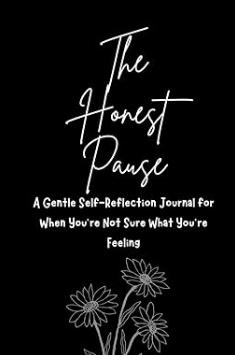
  • The Honest Pause: A Gentle Self-Reflection Journal for When You’re Not Sure What You’re Feeling

    Sometimes the hardest part of self-reflection is knowing where to begin. The Honest Pause is a gentle self-reflection journal designed for anyone feeling overwhelmed, emotionally foggy, burnt out, or unsure of what they’re feeling.

    Instead of pushing positivity or demanding answers, this journal invites you to slow down and explore your thoughts with honesty and curiosity.

    Inside you’ll find 50 thoughtful prompts, open writing space, and 120 minimalist pages designed to help you untangle your thoughts without pressure.

    There are no rules here.
    Skip pages, repeat prompts, or simply sit with a question.

    This is your pause. Take it honestly.

    The Honest Pause

    Like flowers that bloom in unexpected places, every story unfolds with beauty and resilience, revealing hidden wonders.

  • How to Write a Book for Beginners

    Writing a book might seem overwhelming at first, but the truth is that anyone can do it with the right approach. Every author starts with a simple idea and builds from there.

    If you’ve been thinking about writing a book, here are a few simple steps to help you get started.

    Start With a Clear Idea

    Every book begins with an idea. Think about what you want to write about and who your book is for. Your idea doesn’t need to be perfect—it just needs to be something you’re excited to write about.

    Create a Basic Outline

    Before you start writing, it helps to create a simple outline. This gives your book structure and makes the writing process much easier.

    For example:

    • Introduction
    • Key ideas or chapters
    • Conclusion

    Your outline doesn’t have to be detailed—it just needs to guide you as you write.

    Focus on Finishing the First Draft

    One of the biggest mistakes new writers make is trying to make everything perfect the first time. Instead, focus on getting your ideas on the page.

    Many writers set small daily goals like writing 500 words per day. Over time, those small writing sessions turn into a finished book.

    Tools like Google Docs make it easy to organize chapters and keep your writing in one place.

    Publishing Your Book

    Once your manuscript is finished and edited, the next step is publishing. Many new authors choose to self-publish through Amazon using Kindle Direct Publishing.

    If you want to learn the exact steps to publish your book, my guide Self-Publish Your Book walks beginners through the entire process from writing to publishing.

    Check Out The Book Below

    Final Thoughts

    Writing a book may seem intimidating at first, but it becomes much easier once you break the process into simple steps.

    Start with an idea, create a basic outline, and focus on finishing your first draft. The most important step is simply starting.

  • My Middle Name

    My middle name is Christine. It holds significance because my Mom gave it to me and she passed away when I was very young.

    What’s your middle name?

  • The Truth About Writing Your First Book

    Writing your first book sounds exciting… until you actually sit down to do it.

    Suddenly you’re staring at a blank page wondering:

    Where do I even start?
    What if no one likes it?
    What if I’m not a good enough writer?

    If you’ve ever felt this way, you’re not alone.

    Almost every writer — even experienced ones — feels intimidated when starting a new book. The truth is, writing your first book isn’t about being perfect. It’s about starting before you feel ready.

    Why Writing a Book Feels So Intimidating

    Most people grow up thinking authors are somehow different from everyone else.

    We imagine writers as people with perfect grammar, incredible vocabulary, and unlimited creativity. But the reality is much simpler.

    Authors are just people who decided to sit down and write — even when they felt unsure.

    When I started writing my first book, I didn’t feel like an expert. I didn’t have everything figured out. I just had an idea and the determination to see it through.

    And that’s really where every book begins.

    Common Mistakes New Writers Make

    One of the biggest things that slows down new writers is the belief that their first draft has to be perfect.

    It doesn’t.

    In fact, the first draft of almost every book is messy.

    Here are some of the most common mistakes beginners make:

    Trying to edit while writing


    Constantly stopping to fix every sentence makes it hard to move forward.

    Overthinking the entire book before starting

    You don’t need every detail planned out. Many writers discover the story as they go.

    Waiting for motivation
    Motivation comes and goes. Discipline is what actually finishes a book.

    Comparing yourself to experienced authors
    Every published writer started exactly where you are right now.

    How I Wrote My First Book

    When I wrote my first book, I kept things simple.

    Instead of focusing on perfection, I focused on progress.

    I set small writing goals each day and committed to showing up, even when I didn’t feel inspired. Some days the writing flowed easily. Other days it felt like pulling teeth.

    But slowly, word by word, the book came together.

    That’s the secret most people don’t realize about writing a book:

    It isn’t written all at once.

    It’s written one page at a time.

    You Don’t Have to Be an Expert to Write a Book

    Many people believe they need special credentials, degrees, or years of experience before writing a book.

    But some of the most powerful books come from people who simply had a story, an idea, or a perspective they wanted to share.

    Writing a book is less about expertise and more about commitment.

    If you stay consistent and keep writing, the pages eventually turn into a manuscript.

    And that manuscript can become a published book.

    The Truth Most People Don’t Realize

    Finishing a book isn’t about talent.

    It’s about persistence.

    There will be days when writing feels easy and days when it feels impossible. But if you keep going, the progress adds up faster than you think.

    Before you know it, the blank page you started with turns into a finished book.

    Want to Write Your Own Book?

    If you’ve ever dreamed about writing a book but didn’t know where to start, I created a beginner-friendly course that walks you through the entire process.

    From organizing your ideas to publishing your finished book online, the course is designed to help new writers turn their ideas into a real, published book.

    —->Want to write your own book? Check out my beginner self-publishing course.<—-

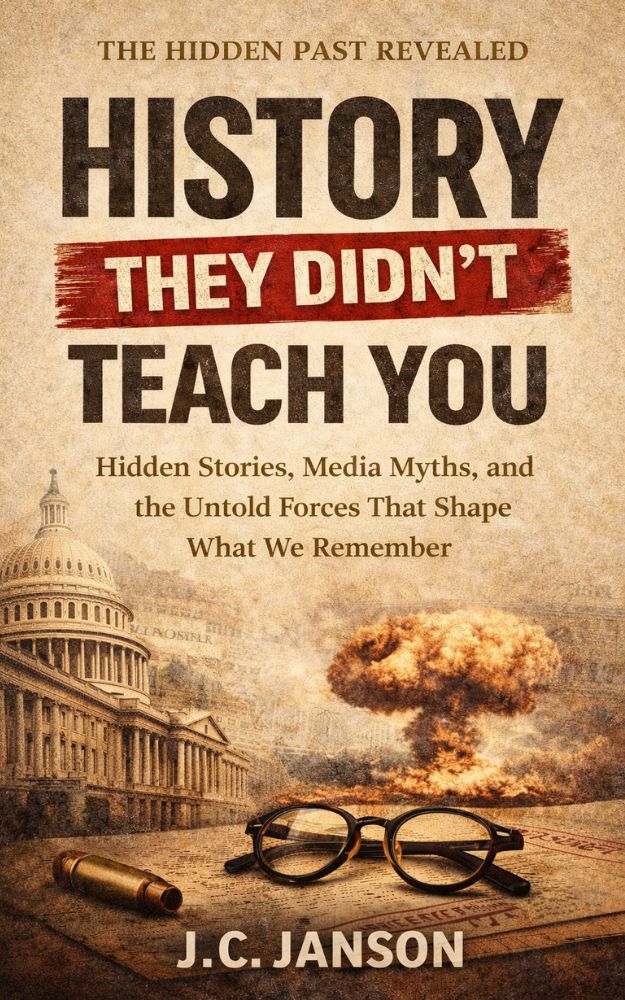
  • History They Didn’t Teach You

    Most of us grew up learning the same version of history.

    A few famous names. A few important dates. A handful of stories repeated year after year.

    But the truth is, history is much bigger than what ends up in textbooks. There are countless innovators, heroes, and world-changing moments that many of us were never taught about in school. Some stories were overlooked. Some were ignored.
    And some were simply lost over time.

    That realization is what inspired me to start writing.

    Learn more HERE <—-

    History They Didn't Teach You. Learn something new
    History They Didn’t Teach You by J.C. Janson